Unlocking the Power of Gaming Properties in Your Craft Workflow
Creative projects thrive on assets that speak directly to personal passions. For gamers, streamers, and digital crafters, gaming properties have become more than just icons on a screen—they’re a visual language. Whether you’re designing a custom t-shirt, a decal for your gaming setup, or a layered shadow box, the right artwork turns a generic blank into a statement piece. This is where a carefully packaged bundle of gaming properties files saves hours of design time and delivers professional results across multiple platforms.
What Makes a Gaming Design Asset Truly Useful?
At first glance, a “gaming property” might seem like any other digital illustration. But practical design demands flexibility. You might be pulling a controller silhouette into Cricut Design Space one day and editing a complex gaming character in Adobe Illustrator the next. The file needs to scale without losing clarity, separate into layers cleanly, and work with both hobbyist software like Silhouette Studio and professional suites like CorelDRAW. A well-prepared gaming properties set isn’t a single image—it’s a toolkit that moves with you across devices and skill levels.
Think about the last time you tried to trace a JPEG in your cutting machine software. The edges wobbled, the points piled up, and you spent ages cleaning nodes. That’s the friction a vector-ready gaming properties bundle removes entirely. You open the SVG, the lines are crisp, and you’re cutting vinyl in minutes instead of wrestling with conversion tools.
Inside the Bundle: Four Formats, Endless Possibilities
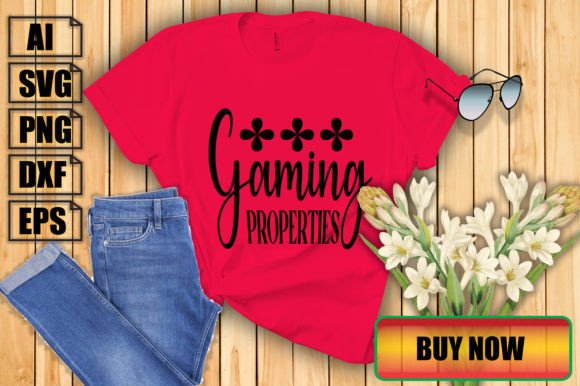
The curated collection we’re exploring today includes four distinct file types, each chosen to serve a specific purpose in a creative workflow. You don’t get one generic image dumped into different containers; you get versions optimized for different machines and editing environments. Here’s exactly what lands in your download folder when you invest in a high-quality gaming properties package.
SVG – The Modern Standard for Precision
Scalable Vector Graphics have become the backbone of crafting software. An SVG file in this bundle opens natively in Silhouette Designer Edition, Adobe Suite, Inkscape, CorelDRAW, and countless browser-based editors. Why does that matter? Because an SVG stores paths, not pixels. You can resize a gaming properties design from a one-inch button to a three-foot wall decal without a single jagged edge. The layers stay intact, too, which means you can separate a gaming headset silhouette from its accent details and assign different cut colors or materials in seconds.
DXF – The Bridge for Silhouette Free Edition Users
Not everyone upgrades to the paid version of Silhouette Studio, and that’s okay. The DXF format opens a door that might otherwise be closed. While the free basic edition doesn’t import SVGs, it reads DXFs without a hitch. For crafters who rely on a Silhouette Cameo or Portrait but haven’t crossed the premium threshold, the DXF gaming properties file is the difference between getting started and hitting a wall. You import the DXF, the design appears with cut lines ready, and you’re on your way. It’s a small file detail with a huge impact on accessibility.
EPS – The Professional’s Choice
If you’re working in a print shop, an advertising agency, or any environment where Adobe Illustrator or CorelDRAW dominates, the EPS format feels like home. Encapsulated PostScript files hold editable vector data, support spot colors, and play nicely with RIP software used for large-format printing. When that same gaming properties design ends up on a banner, a promotional booth backdrop, or a lenticular print, the EPS ensures no one asks you for a “higher resolution version.” It’s already flawless at any size.
PNG – Transparent and Immediate
Sometimes you don’t need cut lines—you need a quick, web-ready image. The 300dpi PNG file provides a high-resolution raster version with a transparent background. Drop it into a Twitch overlay, a YouTube thumbnail, or a sublimation mockup without ever opening a vector editor. The resolution holds up for prints up to around 11x14 inches, and the transparency means you’re never stuck trying to erase a white box. For streamers and content creators who constantly update their visual identity, having an instantly usable PNG of core gaming properties is a massive time-saver.
How Gaming Properties Fit Into Real-World Projects
The abstract file talk matters because it translates directly into things you can hold, wear, and display. Let’s walk through a few scenarios where these gaming properties shine.
Custom Apparel. A local esports team needs matching jerseys. You take the SVG, bring it into your vinyl cutter’s software, and cut heat-transfer vinyl in team colors. The design was created with clean lines, so weeding is easy, and the result looks professional. No stray pixels, no jagged curves. The DPI-independent nature of the vector files means you can replicate it consistently across sizes from youth small to adult 3XL.
Home Studio Decor. Your streaming corner needs personality. The PNG file of a favorite gaming icon goes straight into a photo print order, layered over a gradient background. Or you use the EPS to laser-etch the design into a wooden desk sign. The versatility isn’t a buzzword—it’s practical. One gaming properties purchase covers the sticker on your PC case and the framed art above your monitor.
Merchandise for Content Creators. Say you’re a creator who wants to sell branded gear without holding inventory. Print-on-demand platforms love SVG and PNG uploads. The vector version ensures your design meets platform requirements, while the transparent PNG lets you quickly preview on different product colors. Start with the same gaming properties art and spin up a mug, a phone case, and a tote bag in an afternoon.
Choosing the Right Format for Your Next Project
Having options is empowering, but it also raises a common question: which file do I actually use? The answer depends entirely on your hardware and your goal.
- For cutting machines (Cricut, Silhouette, Brother ScanNCut): Reach for the SVG first. If your software version blocks SVGs, fall back to DXF.
- For laser engraving or CNC routing: EPS or DXF typically communicate better with LightBurn or VCarve.
- For print or web graphics: The 300dpi PNG is your go-to, especially if you’re stacking elements in Canva or Photoshop.
- For large-scale signage or professional printing: Stick with the EPS to maintain color accuracy and scalability.
One underrated advantage of a bundle is redundancy. You might start a project with the SVG, realize your vinyl cutter’s software prefers DXF linework, and switch in ten seconds without downloading or converting anything new. The gaming properties files cover your bases before you even know you need them.
The Practical Benefits of Vector-Ready Gaming Properties
Beyond format compatibility, what makes a specific design set worth choosing over free clipart? It comes down to build quality. A thoughtfully constructed gaming properties vector will have welded compound paths where needed, no hidden stray points, and a logical layer organization. These aren’t things you’ll notice in a thumbnail, but they become glaringly obvious the first time you try to use an amateur file in a project.
Consider the compound path issue. When you pull an SVG into Cricut Design Space, you expect pieces like a game controller’s buttons to cut separately from the main body. If the designer didn’t handle compound paths correctly, you might end up with a single solid silhouette that misses the internal cutouts entirely. A quality gaming properties file has already done that adjustment for you, preserving the intended detail without extra editing.
Another benefit is color separation. In the EPS version, you might find objects grouped by intended material—background in one layer, foreground highlights in another. This matters deeply for multi-color screen printing, layered vinyl, or sublimation with separate heat presses. Instead of manually tracing or using color-select tools on a raster, you click a layer and go.
Small Business Owners and the Value of Gaming Assets
If you sell physical or digital products featuring pop-culture and gaming themes, the legal landscape can be tricky. While this article doesn’t address specific licensing for third-party intellectual property, it’s worth noting that many independent designers create original gaming properties that fall under personal or commercial use licenses—allowing you to sell items made from the designs. Always read the license, but knowing you have a commercial-friendly option can be game-changing for an Etsy shop or a merch table at a local tournament.
Speed to market is another factor. The time between an idea and a listing shrinks dramatically when you have a folder of ready-to-cut gaming properties on your drive. Instead of designing from scratch, you can remix existing elements—swap a headset onto a different character, combine a console silhouette with a custom tagline—and still stand out. The base assets serve as building blocks, not the final output.
Getting the Most from Your Digital Download
To truly leverage these files, a few workflow habits make all the difference. Store the original download in a cloud folder so you never lose the raw assets. When you open an SVG in your cutting software, immediately group or lock the design so you don’t accidentally resize it disproportionately. For DXF users in Silhouette Studio basic, remember that you might need to adjust line colors to make cut lines visible—sometimes they import as black on a dark background.
If you’re using the PNG for a mockup, take advantage of the transparent background by placing it over a screenshot of an actual blank product. This gives you a realistic preview before you commit to printing or pressing. And with the EPS, don’t be afraid to ungroup and recolor elements to match your brand palette; the vector flexibility extends to customization, not just scaling.
Lastly, always test-cut a small version of a new gaming properties design on scrap material. Even well-built files can behave differently across machines and materials, and a quick test saves you from ruining expensive vinyl or wasting time on a full run. Ten minutes of testing pays back tenfold in confidence.
Why the Bundle Approach Wins
You could arguably source similar individual files from free repositories, but the hidden cost there is consistency and time. Compiling a set of matching gaming properties that work together aesthetically takes hours of hunting and quality-checking. A curated bundle arrives with stylistic cohesion, tested format integrity, and the peace of mind that someone has already verified each SVG opens, each DXF imports, and each PNG truly has a transparent background. For a creative on a deadline or a small business juggling multiple orders, that curation is worth its weight in vinyl.
Moreover, the included file types future-proof your work. You might switch from a Silhouette to a Cricut, or from one design software to another, without losing access to the artwork. The gaming properties you bought today will still be usable years from now, even if your toolset evolves. That long-term value is rare in a world of subscription-only assets.
Next time you’re staring at a blank canvas or a pre-order deadline, remember that the right file bundle isn’t just about the designs—it’s about the doors they open. Whether you’re cutting, printing, engraving, or digitally displaying, having SVG, DXF, EPS, and PNG versions of the same gaming properties puts you in control of the output, not at the mercy of a single file format. And that control is exactly what makes a creative project feel rewarding instead of frustrating.