The Pixel-Perfect Power of Retro Console Vector Graphics
There’s a tangible magic to retro gaming consoles. The tactile feel of a cartridge slotting in, the distinctive startup sounds, and the iconic silhouettes of hardware like the NES, PlayStation 1, or Sega Genesis are etched into collective memory. For designers, developers, and content creators, capturing that precise aesthetic in modern digital projects requires assets that are both authentic and versatile. This is where a curated collection of hand-drawn retro video game console vector illustrations becomes an indispensable toolkit.
Beyond Stock Photos: The Vector Advantage
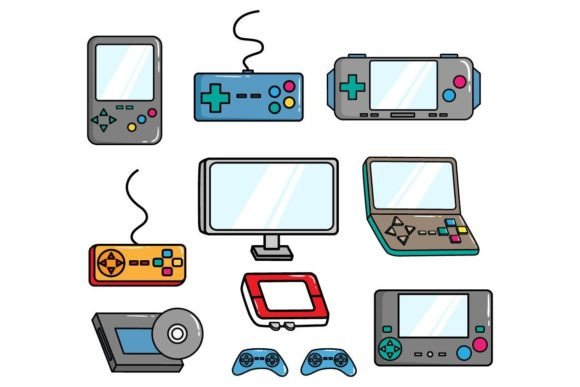
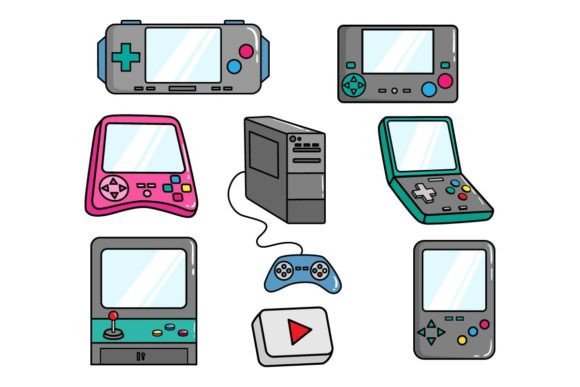
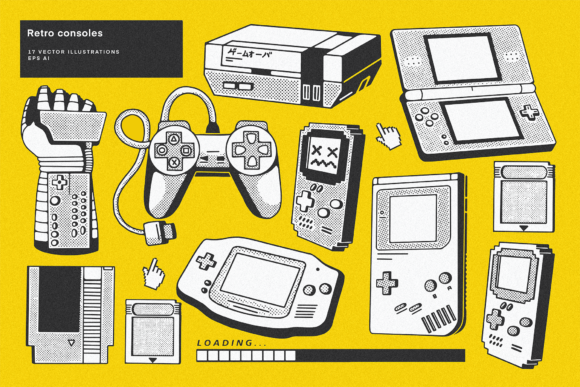
Using standard JPEGs or PNGs of retro consoles often leads to limitations. Scaling up blurs details; changing colors is a complex edit; integrating the graphic into different backgrounds can look clumsy. Vector graphics, by their mathematical nature, solve these problems completely. The bundle described – containing 17 hand-drawn retro console graphics in EPS and AI formats – represents each console as a series of clean paths and shapes. This means you can resize a vector illustration of a Game Boy from a tiny icon to a full-page poster without a single pixel losing its sharpness. The color of a PlayStation’s logo can be altered in seconds to match your brand palette. This flexibility is foundational for professional use.
What’s Inside the Bundle: Precision and Preparedness
The practical value starts with the contents. A single ZIP archive delivers two core files: 1 EPS vector file with all elements and 1 AI file with all elements. The EPS (Encapsulated PostScript) is a universal standard, readable by most design software from Adobe Illustrator to CorelDRAW and even some CAD applications. The AI file offers native ease for users within the Adobe ecosystem, preserving layers and editing capabilities. Having both ensures you’re ready for almost any software environment or collaboration scenario. The “all elements” structure means the 17 consoles are contained together, allowing for efficient batch imports or selective extraction of individual consoles like the Atari 2600 or the SNES.
Modern Applications for Classic Icons
These aren’t just nostalgia pieces. The retro gaming console vector illustrations serve dynamic roles in today’s creative and commercial landscapes.
Consider website design for a retro gaming blog, an online store selling replica hardware, or a developer’s portfolio specializing in classic game emulation. Using these vectors as crisp header images, intuitive navigation icons, or product silhouettes elevates the site’s visual credibility instantly.
In print and merchandise, the applications explode. T-shirt designs, poster art, packaging for retro-themed board games, or pages in a gaming history book all demand artwork that prints cleanly at any size. The vector bundle provides exactly that, avoiding the costly blurring or distortion that raster images can introduce in large-format printing.
For video and motion graphics, vectors can be imported into tools like After Effects. The clean lines allow for smooth animation – imagine a timeline where vector consoles assemble on screen or light up in sequence. They also serve as perfect assets for streamers creating overlays or YouTube channels crafting intro sequences.
Even in user interface (UI) design for apps or software related to gaming, these illustrations can function as elegant visual cues. A settings menu icon shaped like a vector Commodore 64, for instance, immediately communicates a retro-tech theme without needing textual explanation.
Hand-Drawn vs. Automated: The Quality Difference
The specification “hand-drawn” is crucial. While one could technically trace a photo of a console with vector tools, a genuinely hand-drawn approach implies an artistic curation of detail. An artist decides which lines to simplify, which contours to emphasize, and how to represent complex textures like ribbed plastic or matte finish in a clean, graphic style. This results in illustrations that are not just mechanical copies, but interpretations optimized for design use. They balance accuracy with stylistic clarity, ensuring the vector of a TurboGrafx-16 is recognizable yet composed of manageable shapes and curves that are easy to edit. This thoughtful reduction is something automated image-to-vector converters often fail to achieve, producing cluttered, unusable paths.
Key Considerations Before Using Vector Bundles
Integrating such a bundle into your workflow requires a few practical checks. First, confirm your software’s compatibility. Most professional design tools handle EPS and AI, but some simpler or online editors might not. Second, consider licensing. While this bundle is “ready for use,” understanding the specific license terms is essential for commercial projects – ensure it permits the scope of your intended use, whether for personal websites, selling merchandise, or client work. Finally, think about style cohesion. The 17 consoles in a single collection will share a consistent artistic hand, which helps maintain visual unity across a project. If you need to mix assets from different sources, the stylistic mismatch might become apparent.
The Role in Branding and Narrative
Beyond direct illustration, these vectors empower storytelling. For a company building a brand around retro gaming authenticity, these assets provide a library of authentic visual touchpoints. They can be used in logo variations, presentation decks, marketing brochures, and social media campaigns to consistently evoke the desired era. The vector format allows the brand to adapt the same core console graphic across all these mediums without visual degradation. Furthermore, in educational or documentary content about the history of gaming, such illustrations offer a clear, scalable way to visually chart hardware evolution, create comparison charts, or highlight design milestones.
In essence, a bundle of retro gaming console vector illustrations bridges the gap between fond memory and modern utility. It respects the iconic designs of the past by rendering them with precision, then unleashes their potential in today’s digital workflows. Whether you’re a designer aiming for pixel-perfect nostalgia, a marketer crafting a retro campaign, or a content creator building a gaming archive, these vectors offer a foundation that is as flexible and enduring as the gaming consoles they immortalize.