The Modern Designer's Toolbox: When a Mockup Transforms Presentation
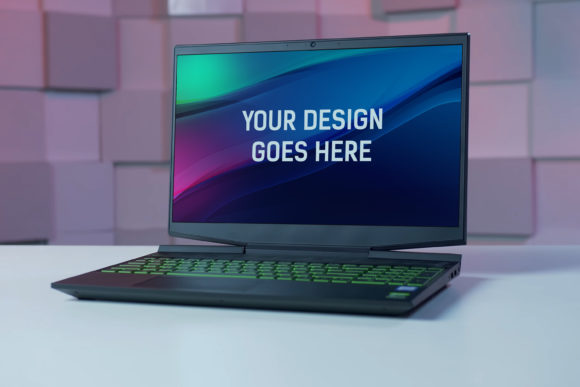
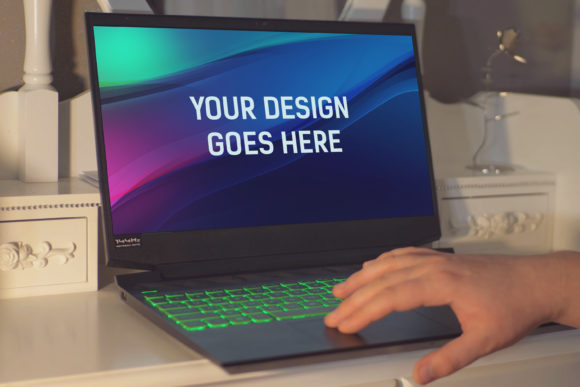
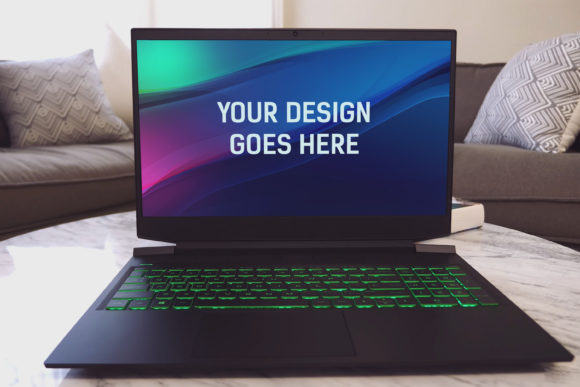
In the digital design landscape, the final presentation of your work is not merely a last step; it is a critical moment of communication. The transition from a flat, abstract file on your screen to a tangible, convincing visual for your client or audience hinges on the tools you use to bridge that gap. Among these tools, high-quality mockups have risen from being simple accessories to essential components of a professional workflow. This shift is particularly evident in fields like gaming hardware design, where the product's aesthetic and contextual feel are paramount. Here, an asset like the HP Gaming Laptop Mockup 15 becomes more than a placeholder—it becomes a stage for your creativity.
Beyond the Screenshot: The Power of Contextual Realism
Consider the common scenario: you have designed a stunning new interface, a vibrant game launcher skin, or a sleek marketing graphic intended for a gaming laptop. Presenting this as a standalone screenshot or a .jpg file on a blank canvas often fails to convey its true impact. The design exists in isolation, divorced from the environment where it will ultimately live. A potential client or stakeholder might struggle to visualize the final application, leading to unnecessary feedback loops on elements that would look perfectly harmonious in context.
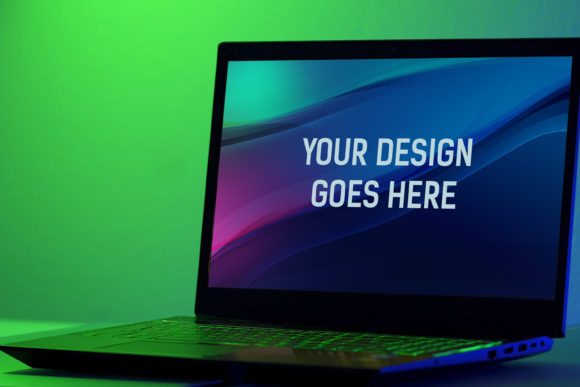
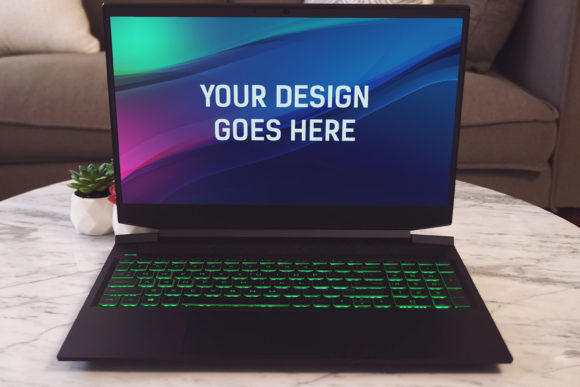
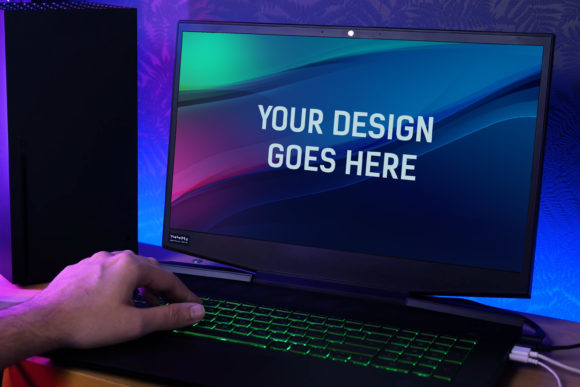
This is the core problem that a dedicated mockup solves. By providing a photorealistic framework—a detailed, high-resolution image of the actual device—it allows you to embed your design into a realistic scene. The HP Gaming Laptop Mockup 15, for instance, offers a specific and credible context. Your design is no longer floating in a void; it is displayed on the screen of a recognizable gaming laptop, complete with accurate reflections, screen texture, ambient lighting, and the physical presence of the device itself. This contextual realism instantly elevates the perceived quality and finish of your work, transforming a concept into a near-final product presentation.
The Anatomy of a Quality Mockup File
What constitutes a mockup that is truly "very easy to use" and delivers professional results? The underlying file structure is key. A mockup built for designers, rather than just for end-users, provides editable layers and smart systems. The described package containing one Photoshop PSD-file, layered and grouped, is indicative of this professional approach.
- Smart Object Integration: The phrase "very easy to edit by Smart Object" is crucial. In Photoshop, a Smart Object is a layer that contains image data from another file. A well-built mockup will have the device's screen area as a Smart Object. This means you can simply double-click that layer, paste in your design or screenshot, save, and it automatically populates the mockup screen with perfect scaling and perspective. Everything is, as noted, automatic.
- Organized Layers and Groups: A layered and grouped PSD file allows for fine-tuning. You might want to adjust the shadow intensity, tweak the background, or modify a reflection without affecting your main design. Logical grouping of elements (like "device body," "screen effects," "background") makes these customizations intuitive and non-destructive.
- Technical Specifications for Versatility: A size of 3000x2000px at 300dpi ensures the mockup is high quality. This resolution provides ample detail for large-format presentations, print materials, or high-definition web portfolios without any pixelation or loss of quality.
Streamlining the Presentation Workflow
The practical benefit of such a resource is a dramatically streamlined workflow. For a freelance designer juggling multiple projects, a marketing agency producing rapid client pitches, or a game developer preparing store assets, time is a constant constraint. The process of manually creating a believable presentation for a gaming laptop design can be hours—setting up a 3D model, rendering, adjusting lighting, and compositing. A pre-made, high-quality mockup collapses this process into minutes.
You take your finished design, "pop it in" via the Smart Object, and instantly have a polished, presentation-ready image. This efficiency is not just about speed; it's about consistency. Using a standardized mockup like the HP Gaming Laptop Mockup 15 across all presentations for a particular project ensures a uniform, professional look, building a stronger brand identity even in internal previews.
Unexpected Users and Applications
The utility of a device-specific mockup extends beyond traditional graphic designers. Educators creating course materials on hardware interfaces can use it to show realistic software examples. Researchers publishing papers on human-computer interaction might employ it to visually demonstrate prototype layouts in a realistic setting. Business owners preparing investor decks for a gaming-related app can use the mockup to make their product slides more tangible and credible.
Even hobbyists and content creators find value. A streamer wanting to customize their on-screen overlays to match their actual HP gaming laptop can use the mockup to preview and perfect the look before implementation. The inclusion of beautiful photo filters in such a package further broadens its appeal, allowing users with less Photoshop expertise to apply stylistic touches—like a cooler color grade or a subtle vignette—to match the mood of their overall project.
Choosing the Right Mockup: Considerations Beyond the Surface
While the advantages are clear, selecting the right mockup asset requires some consideration. The specific device model is important. Using an HP Gaming Laptop Mockup 15 to present a design intended for a different brand or a vastly different screen size might mislead the viewer and create dissonance. Authenticity in the presentation context supports the credibility of the design itself.
Another consideration is the scene composition. Some mockups show the device in a clean, minimalist environment, while others place it in a busier, lifestyle setting (like a desk with peripherals). The choice depends on the narrative you wish to support. A minimalist mockup might focus purely on the interface design, while a lifestyle mockup tells a story about the user's experience. The flexibility of a layered PSD often allows you to hide or modify background elements to suit your needs.
Finally, one must assess the technical compatibility and skill requirement. The promise of being "very easy to use" hinges on having access to Photoshop and a basic understanding of Smart Objects. For those without Photoshop, the output of such a mockup might be a static image they cannot edit, which could limit its usefulness. However, the automatic nature of the process means that even a novice can achieve professional results quickly after a brief tutorial.
The Role in a Complete Design Process
Integrating a high-quality mockup into your process changes the feedback dynamic. When you present a design rendered in a realistic mockup, feedback from clients or team members tends to become more focused and actionable. Comments shift from "I don't know how this will look" to specific observations about the design itself within its intended context: "The text color might need more contrast against that screen glare," or "This element looks perfectly sized for that keyboard layout." This leads to more productive revisions and a shared vision much earlier in the project cycle.
Moreover, it serves as a powerful portfolio and marketing tool. A designer's portfolio showcasing a gaming app interface on a generic gray rectangle lacks impact. The same interface presented via the HP Gaming Laptop Mockup 15 demonstrates not only the design skill but also an understanding of final application and presentation polish. It shows a professional who thinks through the entire lifecycle of a design, from concept to client delivery.
The Evolution from Generic to Specific
The trend in mockup resources is moving towards greater specificity and quality. Early mockups were often generic laptop silhouettes with poor resolution. Today, the demand for brand-specific, model-accurate, and high-resolution mockups like those for the HP Gaming Laptop Mockup 15 reflects the industry's maturity. Design presentations are no longer just about showing what you made; they are about convincing others of its value in the real world. A top-tier mockup provides that convincing reality.
It bridges the gap between the abstract digital workspace and the physical, experiential world of the end-user. By simply popping in your design, you are not just completing a task; you are performing a crucial act of translation—translating pixels on a canvas into a vision of a product in use. And in a competitive field, that act of translation, made effortless and automatic by a quality tool, can be the difference between a concept that is merely approved and one that is genuinely believed in.